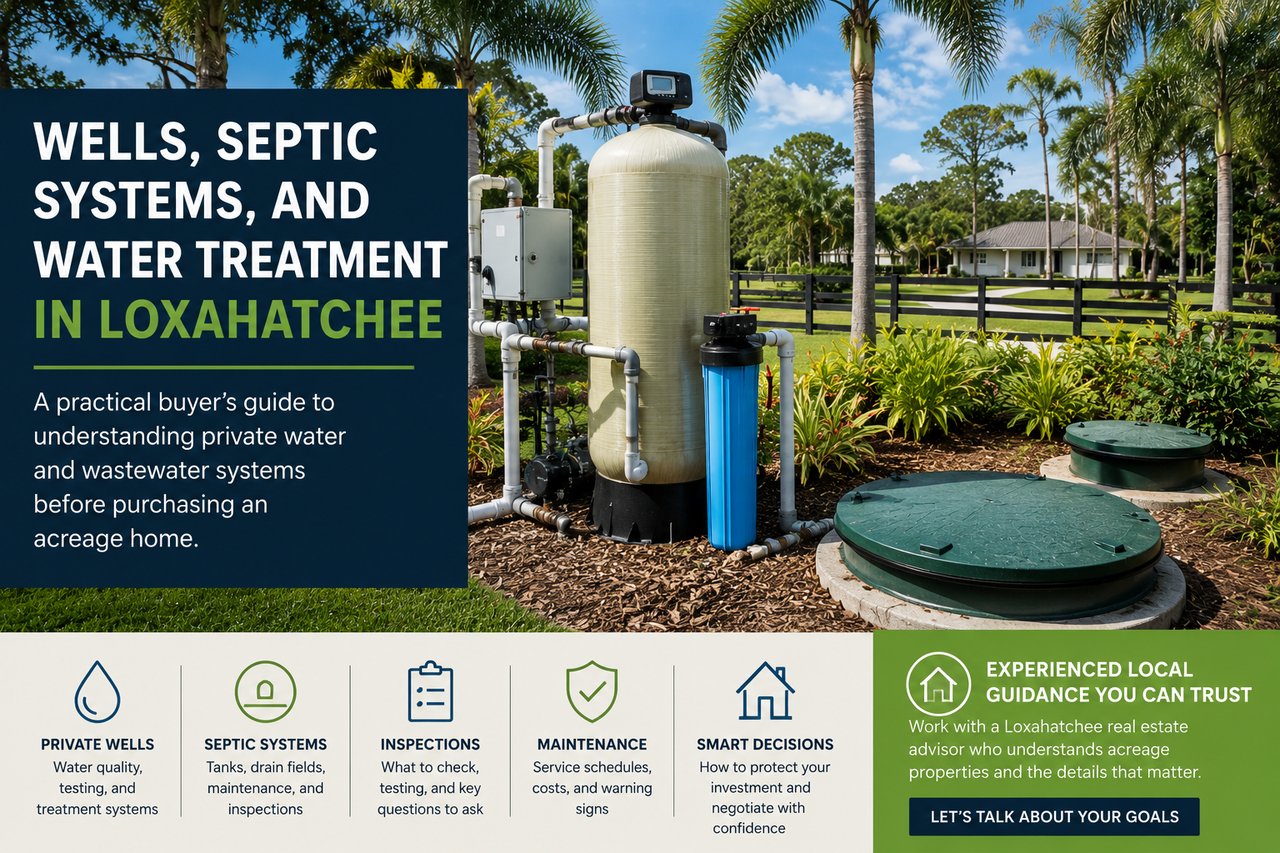
Wells, Septic Systems, and Water Treatment in Loxahatchee
For buyers moving from a city or traditional subdivision, private wells and septic systems may be unfamiliar.
That does not make them a reason to avoid a Loxahatchee property.
It does mean they deserve the same careful review you would give the roof, electrical system, air conditioning, or foundation.
A private system gives the homeowner direct responsibility for water supply, treatment, wastewater disposal, maintenance, and repairs.
Understanding the components before closing can make ownership much easier.
How a Private Well System Works
A private well draws groundwater for use in the home.
The complete setup may include:
The well
A pump
A pressure tank
An aerator
A softener
Filters
Salt or chemical treatment
Electrical controls
Irrigation equipment
Not every property uses the same configuration.
During a showing, buyers may notice tanks, pumps, filters, or treatment equipment outside the home. The appearance alone does not establish whether the system is functioning correctly.
Ask how it operates, how often it is serviced, and which components have been replaced.
Water Quality Should Be Tested
Clear water is not automatically tested water.
Private well buyers should consider laboratory testing and ask about prior results.
Testing can help identify bacterial concerns and provide useful information about the water supply. The appropriate testing may depend on the property, system, and buyer’s concerns.
Annual testing is a sensible ownership practice for private drinking wells.
A buyer should also pay attention to odor, color, pressure, staining, and taste, although none of those observations replaces proper testing.
Water Treatment Equipment Has a Lifespan
Treatment systems help address minerals, odor, hardness, staining, and other water characteristics.
Maintenance may involve:
Salt
Filters
Cleaning
Pump service
Aerator service
Chemical treatment
Equipment replacement
A system that has been regularly serviced may provide dependable performance. A neglected system can become an unexpected post-closing expense.
Ask for maintenance records when available.
Understanding the Septic System
A septic system typically includes a tank and drain field.
Wastewater flows from the home into the tank, where solids are separated. Liquid then moves into the drain field for treatment through the soil.
The system’s performance can be affected by:
Age
Design
Household usage
Maintenance
Soil
Drainage
Tree roots
Vehicle traffic
Location of improvements
A septic system should not be treated as an invisible feature that can be ignored.
Why the Drain Field Location Matters
The drain field occupies usable land.
Its location can affect plans for:
A pool
An addition
A barn
A detached garage
A guest structure
A driveway
Heavy landscaping
Before purchasing, understand where the septic components are located.
A large parcel may appear to have ample building room, but setbacks, drainage, easements, and septic placement can change what is practical or permitted.
What a Buyer Should Inspect
A buyer should discuss the appropriate scope with qualified inspectors.
Depending on the property, the review may include:
Water testing
Well equipment
Water pressure
Treatment equipment
Septic tank condition
Drain field performance
Maintenance history
Permit records
Signs of leakage or backup
A general home inspection remains important, but specialized systems may require specialized professionals.
Warning Signs Worth Investigating
Potential concerns may include:
Persistent odor
Low water pressure
Discolored water
Heavy staining
Frequent equipment cycling
Standing water near the drain field
Slow drains
Sewage odors
Unexplained wet areas
Incomplete maintenance records
A warning sign does not always mean the property should be rejected.
It means the buyer needs enough information to understand the repair, cost, and negotiation options.
Use the Inspection Period Strategically
The inspection period is not only about identifying defects.
It is an opportunity to understand how the property functions.
A buyer may decide to:
Proceed without changes
Request a repair
Request a credit
Renegotiate based on condition
Obtain additional testing
Cancel when permitted under the contract
The right response depends on the contract, evidence, cost, and overall value of the home.
Why Buyer Representation Matters
Private systems add another layer to an acreage purchase.
As an ABR® certified buyer’s agent, I help buyers organize inspections, review the property in context, compare findings with the agreed price, and negotiate strategically when concerns arise.
In 2025, every buyer I represented saved money on the home price, closing costs, or both.
Savings are not guaranteed in every transaction, but preparation and disciplined negotiation can materially improve a buyer’s position.
Explore Loxahatchee Acreage Homes
You can explore Loxahatchee homes for sale and compare properties with acreage, pools, barns, paved-road access, and other features.
When you find a home that interests you, I can help you evaluate more than the visible finishes. We can review the land, systems, inspection priorities, current value, and offer strategy together.