If you've ever Googled "best time to sell a home," you've probably seen the same advice repeated everywhere: list in spring, close before summer. And for most of the country, that's reasonable guidance.
But Palm Beach County isn't most of the country.
Our market runs on a fundamentally different rhythm — one shaped by seasonal residents, second-home buyers, and a buyer pool that arrives on a schedule unlike anywhere else in the United States. If you're planning to sell in Palm Beach County, understanding that rhythm isn't just helpful. It could mean the difference between a bidding situation and a price reduction.
Here's what the data actually shows — and how you can use it to your advantage.
Why Palm Beach County Has Two Peak Seasons (Not One)
Most U.S. real estate markets follow a single arc: slow winter, rising spring, strong summer, fading fall. Palm Beach flips that model almost entirely.
We have two distinct seller peaks separated by a summer slowdown that is more pronounced here than almost anywhere in the country. Each peak is driven by a different type of buyer — and knowing which one you're targeting changes how you should price, prepare, and market your home.
Peak 1: January Through March — The Snowbird Window
This is Palm Beach County's most powerful seller season, and it's almost entirely driven by geography.
Every winter, tens of thousands of seasonal residents — retirees, second-home buyers, and high-net-worth individuals from the Northeast and Midwest — arrive in South Florida. They're not browsing. Many of them are actively looking to buy, and they have a limited window to do it before heading back north in April or May.
This creates a specific and very favorable dynamic for sellers:
Cash buyers dominate. Seasonal and second-home buyers are disproportionately cash purchasers. That means fewer financing contingencies, faster closings, and fewer deals falling apart at the last minute.
Buyer urgency is real. A buyer who knows they're flying back to New York in March is not going to drag their feet on an offer. That urgency compresses timelines and keeps negotiations in the seller's favor.
Pricing power peaks here. With motivated buyers competing for limited inventory, January through March tends to produce the strongest offers relative to list price. This is the window where homes priced correctly sell quickly — and sometimes above asking.
The strategic move most sellers miss: If you want to capture this window, you need to be on the market when snowbirds arrive — not when they're already leaving. That means listing in late November or December so you're visible and active the moment January foot traffic begins. Sellers who wait until February to list often find the most motivated buyers have already written offers elsewhere.
Peak 2: April Through June — The Family Closing Rush
Once the snowbird season winds down, a second wave of buyer activity takes over — and it's driven by a completely different motivation.
April through June is when family buyers surge. These are primary residence purchasers: young families, professionals relocating for work, and move-up buyers who want to be settled before the school year starts. Their timeline is driven by the calendar, not the climate.
This matters to sellers for a few key reasons:
Closing volume is highest in this window. More transactions close between April and June in Palm Beach County than at almost any other point in the year. High volume means healthy competition among buyers, which sustains pricing and speeds up timelines.
Buyers are deadline-motivated. A family trying to start school in August needs to close by June or July. That urgency is a negotiating advantage for sellers — buyers in this window are less likely to walk away over minor inspection items or small price gaps.
April is the overlap month. Late-season snowbirds and early spring family buyers are both active in April, making it arguably the single most competitive buyer environment of the year. A home that hits the market in late March or early April is positioned to catch both waves simultaneously.
The Summer Drop — And Why It Makes the Peaks More Valuable
June through September tells the other side of the story.
Heat, hurricane season, summer travel, and the departure of seasonal residents combine to slow buyer activity significantly. Fewer showings, more days on market, and more room for buyers to negotiate are the norm from late June through Labor Day.
This isn't catastrophic — homes still sell in summer, and motivated sellers can still do well. But the contrast is sharp enough to matter. A home that might attract three offers in February could sit for six weeks in August.
That contrast is actually useful for sellers to understand, because it clarifies what the peaks are really worth. The question isn't whether summer is slow — it's whether you want to capture the market when buyers are competing for your home, or when they're not.
October Through December — The Setup Season
The market doesn't stay quiet. Starting in October, activity begins building again as seasonal residents start returning and early-arriving snowbirds begin their search ahead of the winter rush.
For sellers, this window has real strategic value — particularly for homes that appeal to the second-home and retirement buyer profile. A well-priced listing that goes active in November is positioned ahead of the January competition spike, and it catches the buyers who arrive early specifically to get ahead of the market.
If listing during peak season isn't possible, late fall is often a stronger alternative than it appears on paper.
What This Means for Your Specific Situation
The right time to sell depends on your property type, your price point, and your personal timeline — but here's a practical framework:
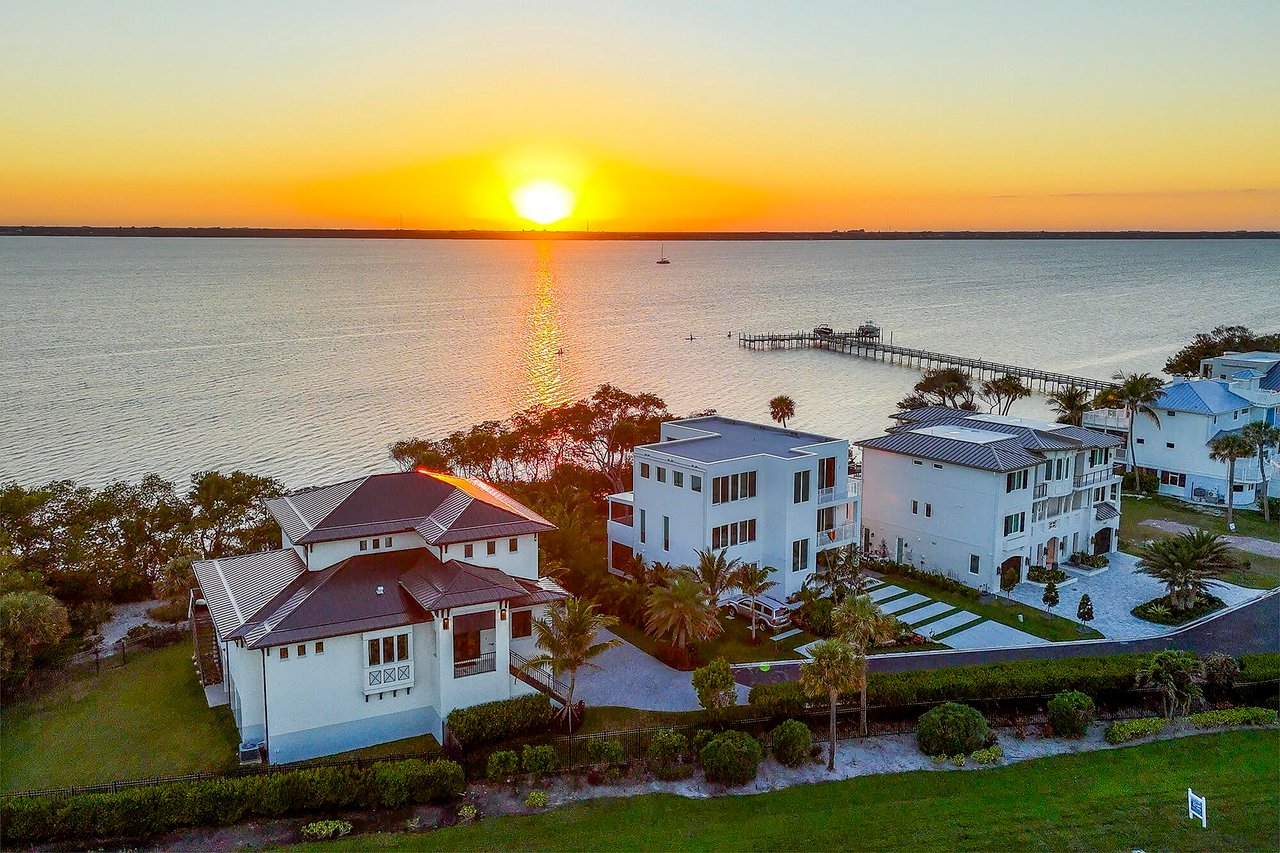
Luxury, second-home, or waterfront properties tend to benefit most from the winter peak. The buyer pool for high-end and vacation-oriented homes skews heavily toward cash buyers who are here in January and February. Getting in front of them requires being on market before they arrive.
Primary residence and family-oriented homes are well-served by the spring window. April and May are when the most qualified family buyers are actively searching and motivated to close on schedule.
Homes that need some prep or updating benefit from a fall listing strategy. Hitting the market in October or November avoids the summer slowdown entirely and positions you for the winter buyer surge before the competitive spring inventory builds up.
The Bottom Line
Palm Beach County sellers have an advantage that most of the country doesn't: two strong peaks instead of one, anchored by a buyer pool that arrives on a predictable annual schedule.
The sellers who use this strategically — who time their listing around when buyers are most motivated rather than when it's most convenient — consistently outperform the market. The sellers who list "whenever they're ready" often end up competing against everyone else who had the same idea.
If you're thinking about selling in the next six to twelve months, the conversation about timing is worth having now — not the week you decide to list.
I've helped buyers and sellers navigate Palm Beach County's market for years, with deep knowledge of communities across the county from Jupiter and Palm Beach Gardens to West Palm Beach, Wellington, and Boca Raton. Whether you're fluent in English or Spanish, I'm happy to walk you through what the current market looks like for your specific home and situation.
Ready to talk timing and strategy? Reach out at (561) 269-9465 or visit VictorVelazco.com to get started.
Victor Velazco is a licensed real estate agent with Echo Fine Properties, serving Palm Beach County and surrounding areas. Bilingual in English and Spanish.